


South Mountain Nursery
Tecoma X Orange Jubilee 'Tecoma Alata' Seeds - Flaming Bells, Orange Trumpet, Esperanza
Tecoma X Orange Jubilee 'Tecoma Alata' Seeds - Flaming Bells, Orange Trumpet, Esperanza
No se pudo cargar la disponibilidad de retiro
Tecoma fulva subsp. guarume, which is a synonym for Tecoma alata, is native to Peru and northern Chile. The shrub is hardy from USDA zones 8a to 11b.
The origin of the genus name, Tecoma, is a contraction of the Mexican name for one of the species known as "tecomaxochitl.". The species name, alata, is Latin and means "winged or having furnished with wings."
Orange Bells prefer full sun. It will survive in partial shade, but the number of blooms will decrease. Loamy, sandy, and rocky soils are well tolerated. Heavily alkaline soils result in chlorosis causing the leaves to yellow. Young plants require frequent watering to establish their roots. Once the shrub is established, it is more drought-tolerant. They are fast-growing and leggy. Orange Bells grow more aggressively in hot and humid climates. The shrub will freeze in temperatures less than 28 degrees Fahrenheit. Pruning is recommended in the late fall or winter to control the plant's height and shape. The shrub is propagated by seeds, softwood cuttings, or stem cuttings.
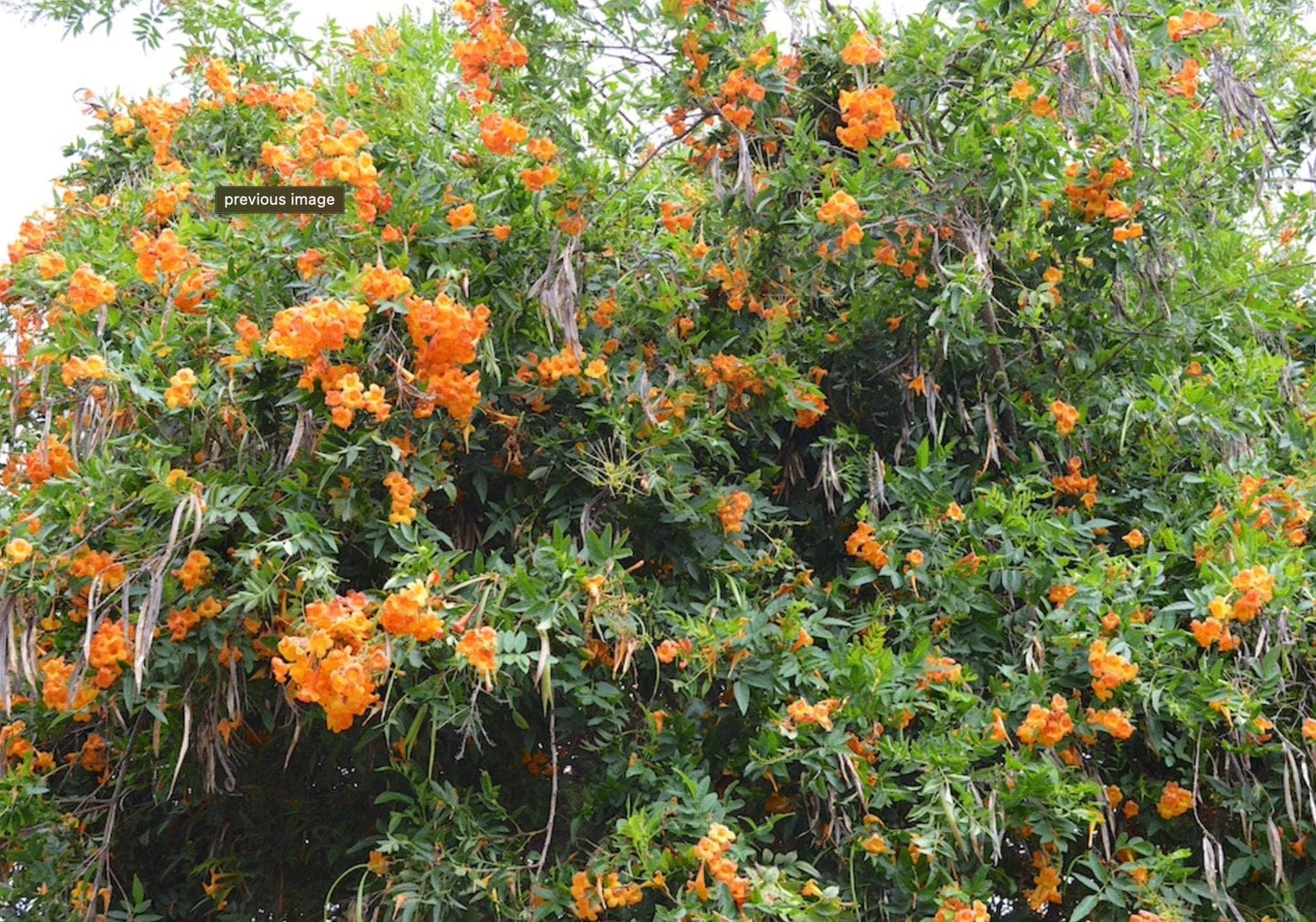
The leaves are glossy green, opposite, and pinnately compound. The leaflet margins are serrated. The flowers are bright orange and appear in clusters or racemes. The fruits are long, narrow, light brown capsules containing the seeds.
The nectar of the flowers attracts butterflies, hummingbirds, and many other birds.
In the landscape, Orange Bells are often grown on patios in containers in warmer climates. They may be used as an accent, border, or hedge to provide privacy and screening.
Envíos y devoluciones
Envíos y devoluciones
Si un artículo llega dañado o no es como se describe, puedes solicitar un reembolso comunicándote con nuestro equipo de atención al cliente dentro de un plazo específico. Es posible que te pidamos que nos proporciones fotos u otra evidencia del daño. Una vez que recibamos tu solicitud y confirmemos el problema, procesaremos el reembolso lo antes posible.


Nuestra garantía
-

Envío
Nos enorgullecemos de nuestro compromiso de realizar los envíos a tiempo. Nuestro equipo trabaja con diligencia para garantizar que cada pedido se procese de manera rápida y eficiente.
-

Reembolsos y devoluciones
Si un artículo llega dañado o no como se describe, puede solicitar un reembolso comunicándose con nuestro equipo de atención al cliente dentro de un plazo específico.
-

Garantía de calidad
Garantizamos la calidad de nuestros productos utilizando materiales de alta calidad y trabajando con proveedores de confianza.
