


South Mountain Nursery
Japanese Daikon - 1000 Seeds - Daikon Radish Seeds - Japanese Radish - Non-Gmo
Japanese Daikon - 1000 Seeds - Daikon Radish Seeds - Japanese Radish - Non-Gmo
Couldn't load pickup availability
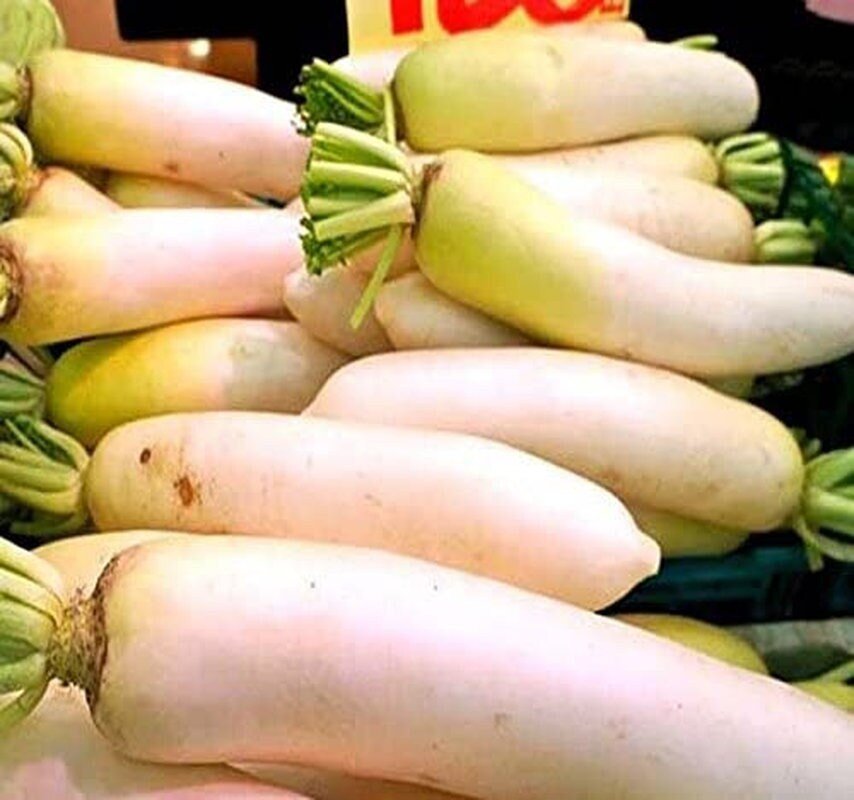
1. Appearance: The daikon is a large root vegetable that typically has a long, cylindrical shape, though some varieties may be more round. The length can range from six inches to over a foot, with a diameter of two to three inches. The skin is thin and has a crisp texture, usually colored white but can be light pink, yellow, green, or black depending on the variety.
2. Interior: The interior of the daikon is white with a crisp, juicy texture. The flavor is mild and slightly sweet, but can also have a slight peppery taste, especially when eaten raw.
3. Cultivation: Daikon is a cool-season crop and prefers a sunny location with loose, well-drained soil. It is typically direct-seeded into the garden and can be grown both in spring and fall.
4. Use: Daikon is versatile and can be used in many types of dishes. It can be eaten raw in salads, pickled, stir-fried, simmered in soups and stews, or grated and used as a condiment. Daikon radish sprouts (kaiware) are also commonly used in salads and as a garnish for sushi.
5. Climate: Daikon radishes are best grown in cooler weather, ideally with daytime temperatures of 60-70 degrees Fahrenheit (15-21 degrees Celsius) and can handle light frost.
6. Maintenance: The Japanese daikon requires regular watering, especially during dry periods to prevent the roots from becoming woody and bitter.
7. Interesting Fact: In addition to its culinary uses, daikon is often used as a cover crop in gardening and farming. It can help break up compacted soil and its leaves can be used as a green manure.
Shipping & Returns
Shipping & Returns
If an item arrives damaged or not as described, you can request a refund by contacting our customer service team within a specified time frame. We may ask you to provide photos or other evidence of the damage. Once we receive your request and confirm the issue, we will process the refund as soon as possible.

Our Guarantee
-

Shipping
We take great pride in our commitment to ship on time. Our team works diligently to ensure that every order is processed promptly and efficiently.
-

Refunds & Returns
If an item arrives damaged or not as described, you can request a refund by contacting our customer service team within a specified time frame.
-

Quality Guarantee
We ensure the quality of our products by using high-quality materials, and working with reputable suppliers.
